Many buyers approach me believing this decision comes down solely to the interest rate. In reality, it rarely does. The better question is whether an FHA loan or a conventional loan provides a cleaner approval, a more manageable monthly payment, and fewer surprises after you move in.
In Southwest Florida, the math behind your homeownership journey can change quickly. Factors like insurance costs, HOA dues, condo association rules, and property condition all impact your file. When I compare these two options, my goal is to help you secure the version of the monthly payment you can live with long term, rather than the one that simply looks attractive on day one.
Key Takeaways
- Beyond the Interest Rate: Choosing between FHA and conventional loans is less about the advertised rate and more about finding a sustainable monthly payment that accounts for local insurance, taxes, and association fees.
- FHA Flexibility: FHA loans serve as a valuable option for borrowers with lower credit scores or limited cash reserves, though they come with stricter property condition requirements and long-term mortgage insurance costs.
- Conventional Long-Term Value: Conventional loans are often the preferred choice for buyers with strong credit profiles because they allow for the removal of private mortgage insurance (PMI) once 20% equity is reached.
- Southwest Florida Considerations: In coastal areas, the specific property—especially in condo developments—can dictate your financing options; weak association reserves or maintenance issues can stall a loan regardless of your personal credit strength.
Where FHA and conventional loans split early
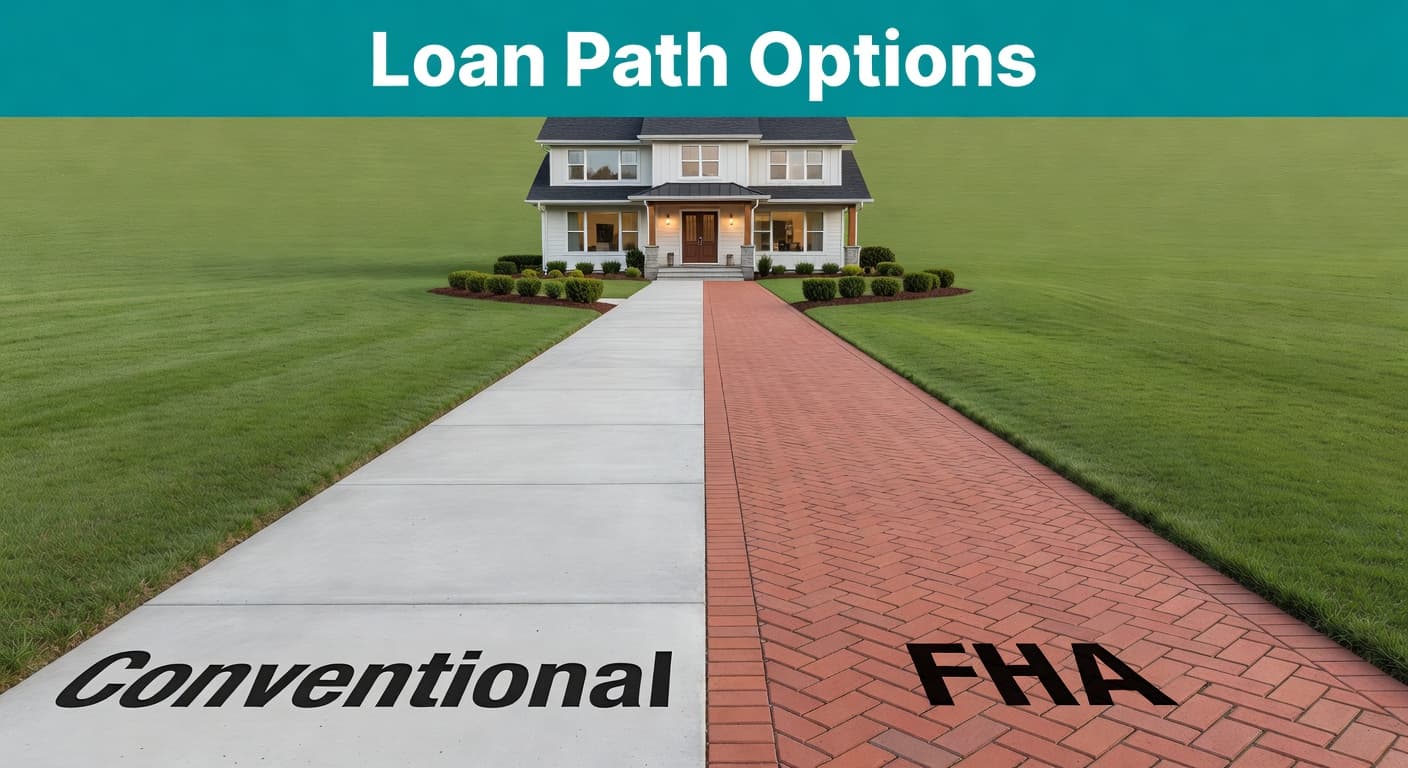
When evaluating FHA vs conventional financing options, I look closely at four primary factors: credit score, down payment, mortgage insurance, and property requirements. An FHA loan is typically easier to qualify for, while a conventional loan often costs less over time if the borrower has a strong financial profile.
Here is a quick side-by-side comparison I use to help clients navigate these two paths.
| Factor | FHA loan | Conventional loan |
|---|---|---|
| Minimum credit score | Often 580 for 3.5% down, sometimes 500 to 579 with 10% down | Usually around 620 |
| Down payment | 3.5% with a 580+ score | Sometimes 3%, often 5% or more |
| Mortgage insurance | Required, and it can last for the life of the loan if you put less than 10% down | PMI is usually removable once you reach 20% equity |
| DTI ratio | Often more flexible | Usually tighter, though strong files can get room |
| Occupancy | Primary residence | Primary, second home, and some investment property options |
| Property requirements | More strict on condition | Usually more flexible |
That table illustrates why I never call one program better without context. The government-backed FHA loan acts as a softer landing for buyers with thinner credit or limited cash. Conversely, the conventional loan is often the better long-term fit for buyers who have a higher credit score and want a cheaper exit from mortgage insurance costs.
Understanding the nuance between FHA conventional loans helps my clients make the right decision for their financial future. I also remind buyers that specific loan limits still apply, and these loan limits vary by county. In Southwest Florida, I always check the current figures before I quote any financing terms with confidence.
Why Southwest Florida changes the math
This is the part many buyers miss. The loan type matters, but your total monthly payment matters more. In Fort Myers, Cape Coral, Naples, and nearby coastal areas, taxes, wind coverage, flood insurance, and association dues can move your monthly payment significantly.
I look at the full housing payment, including principal, interest, taxes, insurance, and any association dues. If that number is tight before you pay your closing costs, I get cautious. Tight math rarely gets friendlier after you own the place.
I don’t price a home off the polished payment. I want the real one, after taxes, insurance, and dues show up.
Condos make this even trickier. Buyers often compare FHA and conventional loan terms while the bigger problem sits in the building itself. If the association has weak reserves, a large special assessment, high insurance deductibles, or known repair issues, the lender or the appraiser may pause the file no matter how good the borrower looks.
I see this a lot in older coastal buildings. Roof questions, balcony repairs, water intrusion, concrete work, parking structure issues, and delayed maintenance all get harder scrutiny now. On some condo files, master policy deductibles above about $50,000 per unit can create trouble. If repairs are underway, underwriters may ask for proof of funding, contractor agreements, timelines, and inspection updates. A nice lobby does not fix that.
That is why the best loan is sometimes not the real question. The real question is whether the home, or the condo project, is easy to finance in the first place.
When FHA is the smarter choice
I often recommend an FHA loan when a buyer has solid current income but a less polished financial file. Perhaps the credit history is fair rather than excellent. Maybe the cash available for the down payment is limited. If the debt-to-income ratio is a little snug, conventional underwriting can feel too tight, making an FHA loan a more practical alternative.
For many, an FHA loan is the program that finally gets them in the door. The low down payment requirements help, as does the credit flexibility. If you have experienced a few financial bumps in the past but your current situation is stable, an FHA loan often provides me with more room to work with.
This is one reason an FHA loan remains so popular with first-time home buyers. If you are early in the process, these first-time homebuyer mortgage programs are definitely worth a look for those looking to enter the market.
Still, an FHA loan is not the easy button some people assume it is. The home must pass stricter condition standards during the appraisal process. Peeling paint, broken handrails, roof issues, or exposed damage can cause significant delays. Additionally, an FHA loan is specifically designed for a primary residence rather than for a pure investment property.
The other tradeoff involves the cost of coverage. An FHA loan requires an upfront mortgage insurance premium, and you must also pay a monthly MIP. If you put less than 10 percent down, that MIP can stay for the life of the loan. When I suggest an FHA loan, I also discuss what your next chapter might look like. If your credit is improving, refinancing later may be part of the plan. If you intend to hold the property for a long time, I want to be honest about that long-term cost on the front end.
When conventional usually wins
A conventional loan typically becomes the preferred path when your credit score is strong and your financial file is clean. If you can manage the required down payment and your profile meets the standards set by Fannie Mae and Freddie Mac, a conforming loan often offers more competitive pricing and a superior mortgage insurance structure.
Some programs allow as little as 3% down, though I often see buyers opting for 5% or more to secure a better overall setup. One significant advantage is the handling of private mortgage insurance. Unlike FHA loans, where the insurance premium often stays for the life of the loan, conventional PMI can be removed once you reach 20% equity. This removal provides a meaningful reduction in your monthly payment over time. When working with private lenders, you will find options for a traditional fixed-rate mortgage or even an adjustable-rate mortgage depending on your goals.
A conventional loan also offers much more flexibility for properties beyond primary residences. Second homes and investment properties are the standard territory for these loans, as FHA financing is restricted to primary residences. If you are purchasing a rental property, the conversation usually shifts toward conventional financing or a DSCR loan, as this path is essential for those prioritizing investment homeownership.
With a DSCR loan, the lender evaluates whether the property’s rental income covers the housing payment, known as PITIA (principal, interest, taxes, insurance, and association dues). For example, if a rental brings in $3,000 per month and the total property payment is $2,500, the ratio is 1.20, meaning the property generates 20% more than its financing costs. For investors, this income-based qualification can be more beneficial than relying solely on personal tax returns.
I also pay close attention to liquid reserves on any conventional loan or investment file. This refers to the cash you have remaining after closing to handle unexpected costs. Because vacancies, repairs, and insurance spikes can occur at any time, having these reserves is critical to stabilizing your monthly payment.
Self-employed buyers add another layer of complexity. If your business tax write-offs make a conventional loan approval difficult, and FHA guidelines do not offer a solution, you might consider a bank statement program. This allows us to look at real cash flow rather than forcing a tax return story that does not reflect your actual income. Regardless of your situation, finding the right interest rate is key to long-term success. If you want help comparing interest rate options or evaluating your financing path, Contact Us for a free consultation on mortgage options and rates.

Frequently Asked Questions
Can I use an FHA loan to buy an investment property?
No, FHA loans are strictly reserved for primary residences. If you are looking to purchase a second home or an investment property, you will typically need to qualify for a conventional loan or other specialized financing programs.
Is it easier to qualify for an FHA loan than a conventional loan?
Generally, yes. FHA loans are designed to be more accessible, often accepting lower credit scores and providing more flexibility with debt-to-income ratios compared to the tighter underwriting standards of conventional loans.
How does private mortgage insurance differ between these two loans?
With an FHA loan, mortgage insurance premiums often remain for the life of the loan if your down payment is less than 10%. In contrast, conventional mortgage insurance can usually be canceled once your home equity reaches 20%, which can lead to significant long-term savings.
Does the condition of a home affect my loan approval?
Yes, especially with FHA loans. FHA appraisers enforce strict safety and habitability standards, meaning issues like peeling paint, roof damage, or structural concerns must be addressed before the loan can be approved.
Final Thoughts
Deciding between FHA conventional loans is not just about chasing the smallest down payment or the lowest advertised interest rate. The right way to decide is to match the specific loan terms to your credit score, your available cash, the property itself, and the payment amount that you will still be comfortable with six months from now.
In Southwest Florida, the house matters, and the building matters just as much. Insurance costs, association dues, condo finances, and the overall property condition can quickly change which option makes the most sense.
If I had to boil it down to one rule, it would be this: pick the loan that fits your actual monthly payment rather than the initial sales pitch. Choosing the right financing strategy ensures your long-term homeownership experience ages well long after the closing table is behind you.