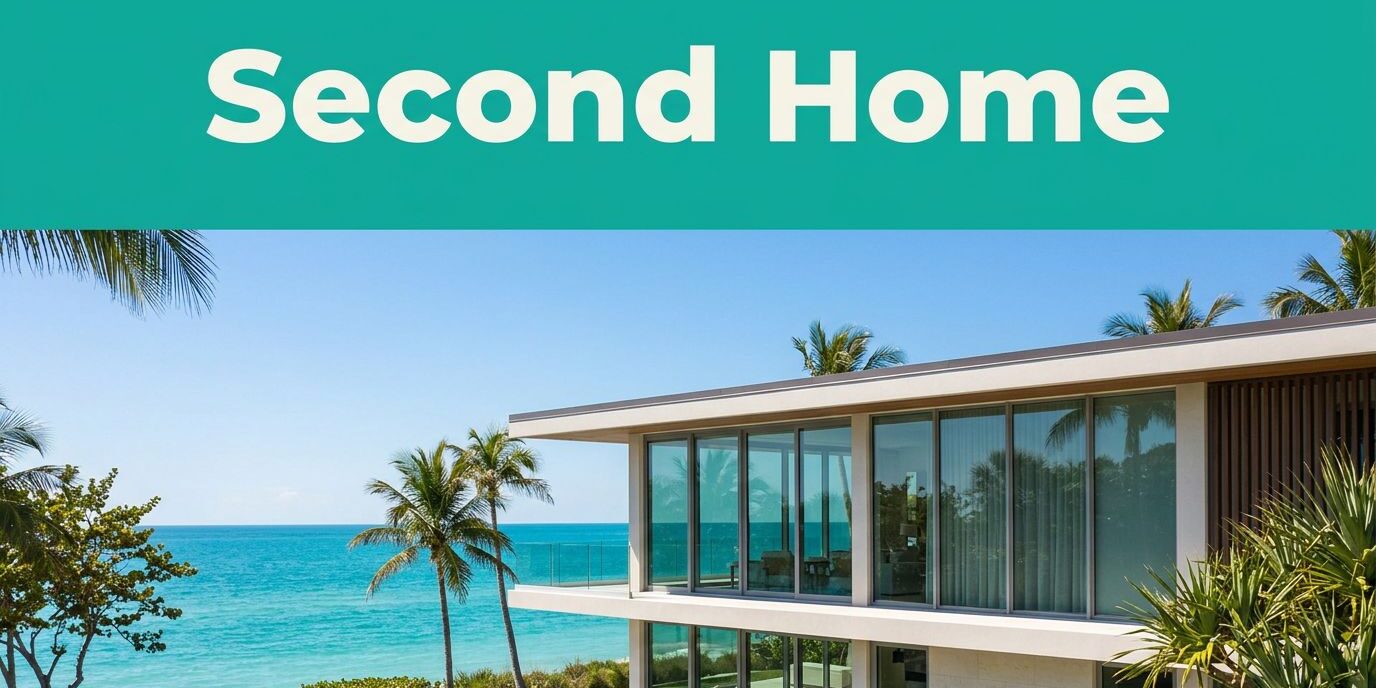
Buying a sunshine-filled vacation home in Southwest Florida is a popular lifestyle goal, but the process becomes complex once your lender asks how you intend to use the property. Navigating second home mortgage rules is essential because these regulations differ significantly from those applied to your primary residence. When you understand these distinctions early, you can better manage your expectations and explore the right financing options for your situation.
I often see buyers get tripped up on the same recurring issues, such as personal use requirements, rental plans, condo association approvals, and the true monthly cost of ownership. If you are eyeing property in Fort Myers, Naples, Cape Coral, or Marco Island, it helps to understand these guidelines before you write the offer.
Key Takeaways
- Distinguish by Intent: A second home is for your personal use, while properties intended to generate rental income or requiring rental revenue to qualify are classified as investment properties.
- Prepare for Higher Costs: Florida vacation homes often carry higher insurance premiums, specialized tax rates (non-homestead), and potential special assessments that must be factored into your budget.
- Verify Condo Health: Lenders scrutinize condo associations for financial stability, reserve funding, and pending litigation; ensure the building meets strict requirements before committing.
- Document Financial Capacity: You must prove you can comfortably afford both your primary residence and the new property, with lenders calculating your total debt-to-income ratio across all obligations.
- Get Real Numbers Early: Do not rely on listing prices for monthly payment estimates; obtain actual quotes for property taxes, insurance, and HOA dues to understand your true monthly commitment.
What lenders mean by a second home
I like to start here because the label controls the whole file. A second home is not just a casual term for an extra property. In the eyes of a lender, it is a secondary residence you plan to occupy for part of the year, while your primary residence remains located elsewhere.
For most snowbirds, that story makes sense. You live up north, you spend part of the winter in Florida, and the home is available for your own use. Lenders generally require that the property is suitable for year-round use to qualify as a second home. They also want to ensure the arrangement does not resemble a hotel or a full-time rental business. When assessing these files, lenders typically follow standard guidelines set by Fannie Mae and Freddie Mac to determine if the property qualifies for lower down payment requirements compared to an investment property.
Distance matters too, at least in a common-sense way. A condo in Naples and a primary residence in Ohio usually fit the second-home classification perfectly. Two houses only fifteen minutes apart, however, often raise red flags.
You also need a property you can actually occupy. Timeshare-style arrangements and mandatory rental pools can create problems fast. So can a condo-hotel setup where the unit acts more like inventory than an owner-occupied private home.
This quick comparison helps frame the most common snowbird scenarios.
| Use of the property | Likely loan treatment | Why it matters |
|---|---|---|
| You use it in season and keep it for yourself | Second home | This is the cleanest fit for snowbirds |
| You use it part of the year and may rent it a little, but you do not need rent to qualify | Sometimes still a second home | The lender and condo rules need a closer look |
| You plan to rent it often, or you need projected rent to qualify | Investment property | Different pricing, down payment, and underwriting usually apply |
That last point is where buyers lose time. They call it a second home because that sounds simpler, but the file may actually classify it as an investment property. Before you go under contract, tell the lender exactly how you plan to use the place. If you sign occupancy paperwork saying one thing and live another, that creates a serious issue rather than a minor technicality.
The financial rules that decide whether you qualify
Lenders are still looking at the same fundamental metrics, including your down payment, credit score, income, debt, and liquid assets remaining after closing. For a Florida second home in 2026, I usually tell buyers to prepare for a down payment requirement between 10 percent and 20 percent. While some files land outside that range, that is where many snowbird conversations start. Having a larger down payment ready can significantly improve your mortgage options.
Your credit score matters more than people often realize. A credit score in the mid-to-upper 600s is where buyers generally start feeling comfortable, and stronger scores typically unlock better pricing and rates. If your credit score is borderline, your interest rate can fluctuate quickly.
Your income must support both properties. The mortgage lender will calculate your debt-to-income ratio by stacking your current primary residence housing payment, the new Florida mortgage payment, car loans, credit cards, and any other monthly obligations. This is where people get surprised. The winter condo may look affordable on its own, but when your debt-to-income ratio is calculated including your current home, the totals rise rapidly. Please note that traditional programs like an FHA loan or a VA loan are strictly intended for a primary residence and cannot be used for a vacation property.

Cash reserves are the next hurdle. This is the liquid money you retain after paying your closing costs, enough to cover several months of payments. Lenders want proof that you can absorb a repair, a surprise bill, or an insurance increase without scrambling.
If you are self-employed or paid in uneven ways, the second-home label does not erase documentation requirements. These loans still rely on tax returns, W-2s, bank statements, retirement income, and asset records. A complex income story can still work, but it must be fully documented.
Florida adds another layer. Insurance is not a footnote here. Windstorm coverage can be expensive, flood insurance may be required, and condo dues can push the total monthly payment higher than the listing suggests. I also tell buyers not to assume a Florida homestead tax break on a second home. Most snowbirds will not qualify for it, so I run taxes at the non-homestead level from day one to ensure your down payment estimates remain accurate.
A good pre-approval is not a guess. It is built on real documents and real costs.
When a snowbird home stops being a second home
This is where the line gets fuzzy. A lot of buyers say that they will use a property in season and rent it the rest of the year. Sometimes that still fits a second home profile, but other times it does not. What matters is whether the home is truly for your personal use and whether you need rental income to make the loan work.
If you need rental income to qualify, it usually is not a second home file anymore.
That one rule clears up a lot. Once the lender has to rely on projected rent, or the property is set up to run like an income machine, you are usually talking about an investment property.
That shift changes more than a label. It can change your down payment, interest rates, reserve requirements, and the documentation the lender requires. It can also change your best loan type. While a conventional loan might be your first choice, it may not be feasible if the property is classified as an investment property.
I bring this up because many snowbirds drift toward investor behavior without meaning to. They buy a seasonal unit, learn the community allows short stays, then start counting on peak season rent to justify the purchase. At that point, the file may fit investment property financing better than a standard second home loan. If you plan to rely on third-party property management to handle the logistics of these seasonal rentals, your lender will definitely look at the unit as a business asset.
One option some buyers explore is a DSCR loan. That stands for debt service coverage ratio. In plain language, the lender compares expected rent to the full monthly housing expense, including principal, interest, taxes, insurance, and association dues. If a furnished condo could rent for $3,000 a month and the full payment is $2,500, the ratio is 1.20. The property brings in 20 percent more than it costs to finance.
That is not a second home loan, but it matters because it is often the better fit when the property is meant to carry itself. Even there, reserves still matter.
Check the community rules before you fall in love. Some associations require 30-day, 60-day, or 90-day minimum stays. Some do not allow leases in the first year. Others block short-term rentals outright. State law is only part of the picture, as the condo documents still matter.
Southwest Florida condos have extra mortgage rules
A condo can be the perfect snowbird setup, but it can also wreck a clean loan file late in the process. I see this most in older coastal buildings where the unit looks great, but the association records tell a rougher story.
When you apply for a loan, your mortgage lender is not only approving you as a borrower. They are also judging the building itself. This means they will examine the budget strength, reserve funding, insurance coverage, pending repairs, and whether the association is keeping up with an aging structure. Because condo dues and special assessments impact your monthly obligations, they are factored into your overall debt-to-income requirements. Furthermore, if your down payment is less than 20 percent, you may also need to account for mortgage insurance as part of your monthly carrying costs.
Special assessments are a prime example of why this vetting is necessary. One assessment does not automatically kill a deal, but the reason behind it matters. Money for a pool refresh or cosmetic work lands differently than money for concrete repair, structural safety, or a long-delayed roof project. If a building is deemed high-risk by investors, it can even impact the interest rates available for your financing.
Insurance is another pressure point. Agency reviews often get nervous when a condo master policy has high deductibles. In today’s market, deductibles above roughly $50,000 per unit can create trouble on some files because the coverage may not look strong enough to withstand a storm.
Then there is deferred maintenance. Balconies, roofs, parking structures, water intrusion, and concrete repairs get hard questions now, especially near the coast. Salt air and storm exposure do not make those issues smaller. If the association knows about a major problem and has not fixed it, the lender may pause or decline the loan.
If repairs are already underway, the underwriter may ask for more than a polite explanation. I have seen requests for proof of funding, contractor agreements, timelines, inspection reports, and status updates on the work. On some older buildings, condo lending starts to feel a lot closer to commercial underwriting than a simple home mortgage. It is always wise to work with a local real estate agent who has deep experience with specific building histories, as they can often alert you to these red flags before you ever make an offer.
Ask one blunt question early: is this HOA collecting enough money for the building it owns? A glossy lobby helps the sale, but it does not answer whether the structure is stable enough to support a 30-year loan.
The payment is more than principal and interest
This is the section I wish every out-of-state buyer would read twice. The monthly number on the listing is never the number that matters. In Southwest Florida, the real mortgage payment often grows once I plug in property taxes, insurance, association dues, and the costs that show up only after you own the place.
For a condo or townhouse, dues may cover some items, but they can still be high. For a single-family home, you may pick up pool care, lawn service, pest control, and storm prep. Waterfront and older properties often bring steeper insurance quotes. If the home is in a flood zone, price that in before the offer, not after the inspection.
I like to run the deal with real numbers, not listing hype. That means getting these figures early:
- A fresh insurance quote that includes wind coverage, and flood if the property needs it
- Current property taxes, without assuming a homestead exemption that would only apply to your primary residence
- HOA or condo dues, plus any pending increase
- Planned or rumored special assessments, because rumors in condo buildings often become bills
When buyers skip this step, the math lies. A mortgage payment that looked comfortable on paper can turn tight fast once the actual costs land. If the budget already feels strained before closing, it rarely feels better after closing. Remember, you are still maintaining your primary residence back home, so adding a vacation home requires a clear look at your total cash flow.
Some buyers fund these purchases by tapping into the equity of their current home through a home equity line of credit or a cash-out refinance. However, lenders still focus on your total housing expense, or PITIA (principal, interest, taxes, insurance, and association dues). They use this figure to calculate your debt-to-income ratio, asking a simple question: can you carry this home without wishful thinking?
That question is not unfair. For a snowbird, it is the difference between a winter escape and an expensive stress project.
Waterfront, luxury, and new builds come with extra layers
Some of the best snowbird homes in Naples, Bonita Springs, Fort Myers Beach, and Marco Island do not fit a plain vanilla loan box. Price is one reason. Once a purchase climbs past conforming loan limits, SWFL jumbo mortgage options can enter the conversation. These jumbo files typically require a stronger credit score, cleaner documentation, and a larger down payment compared to standard loans. Additionally, interest rates for jumbo financing may differ from conforming programs, so it is essential to plan your budget accordingly.

Photo by K
Waterfront homes can also be harder to value. The view, lot, elevation, insurance load, age of the structure, and recent comparable sales all shape the appraisal. A beautiful kitchen does not erase the underwriter’s question about the marketability of a vacation home if the property is highly unique or carries unusual risk. If you are purchasing a high-end single-family residence, underwriters will also verify that your assets can comfortably support the required down payment and the property’s carrying costs.
New construction has its own lane. If you are building a winter home instead of buying one, a construction-to-permanent loan can fund the build first and then convert into a regular mortgage when the home is done. I like that structure because it can remove a second closing and make long-term financing more predictable.
The lender will still study the project closely. Expect questions about the builder’s track record, construction plans, material lists, cost breakdowns, timeline, permits, and whether the project lines up with local code and zoning rules. A high credit score and a clear, detailed builder package are vital for these projects. A vague budget or a weak builder package can slow the whole file.
This matters even more for snowbirds because building from a distance is harder. You are not down the street checking progress each week. The paperwork has to be clean before the first draw goes out.
Whether the property is luxury, waterfront, or newly built, the same rule applies. The home may be stunning, but the financing still has to make sense on paper.
How I tell snowbirds to get ready before they write the offer
The easiest closings start before the contract is signed. Buyers who succeed decide early how they will use the property, whether it is a true vacation home or something else, and what monthly payment remains comfortable once the reality of ownership sets in.
My prep list is short:
- Be honest about occupancy, because a rental-first plan should not be disguised as a second home or an investment property.
- Gather income and asset documents before you start shopping, not after.
- Keep enough cash on hand to cover your down payment, closing costs, and required reserves after closing.
- Get insurance quotes early, especially on coastal homes and older condos.
- Read the condo budget, rental rules, and assessment history before the inspection period ends.
If you are self-employed, retired with layered income, or buying with significant assets but a modest salary, that does not mean the deal is dead. It means your choice of financing options matters more. I would rather match the right loan to your actual plan than spend weeks forcing a second home loan label onto something that functions as a rental.
That is also why getting a pre-approval is not paperwork theater. A real pre-approval gives you a realistic purchasing ceiling rather than a fantasy number, ensuring you know exactly what you can afford.
If you want help sorting through these requirements before you write the contract, Contact Us for a free consultation on mortgage programs and rates. A short conversation can save you a month of reworking a bad file, helping you secure your dream property with confidence.
Frequently Asked Questions
Can I use an FHA or VA loan for my Florida vacation home?
No, FHA and VA loans are strictly reserved for primary residences where you intend to live full-time. You will need to utilize conventional financing or other non-government loan programs designed for secondary properties.
What is the typical down payment required for a second home in Florida?
Most lenders expect a down payment ranging between 10 percent and 20 percent. Having a larger down payment not only strengthens your offer but can also provide access to more favorable interest rates and mortgage terms.
How does the lender decide if my property is a ‘second home’ or an ‘investment property’?
Lenders base this on your stated intent and your financial necessity; if you need rental income to qualify for the mortgage, it is almost certainly an investment property. Additionally, properties managed as rental businesses or located in rental-heavy resort pools are typically categorized as investments.
Why are older Florida condos harder to finance than single-family homes?
Lenders view older buildings as higher risk due to deferred maintenance, potential structural issues, and inadequate reserve funds for repairs. If an association has pending special assessments or poor insurance coverage, the lender may decline the financing even if you are a qualified borrower.
Final thoughts
A successful purchase typically happens when your financial profile, your long-term goals, and the property details all align. Your new vacation home needs to match your intended use, your income must be sufficient to support both your primary residence and your secondary residence, and the specific property must satisfy Florida’s unique requirements.
This is why I never treat second home mortgage rules like simple boilerplate language. Navigating the complexities of a second home loan in Southwest Florida requires attention to detail. Ultimately, these nuances decide whether your purchase results in a relaxing winter retreat or a stressful transaction that keeps slipping away.